
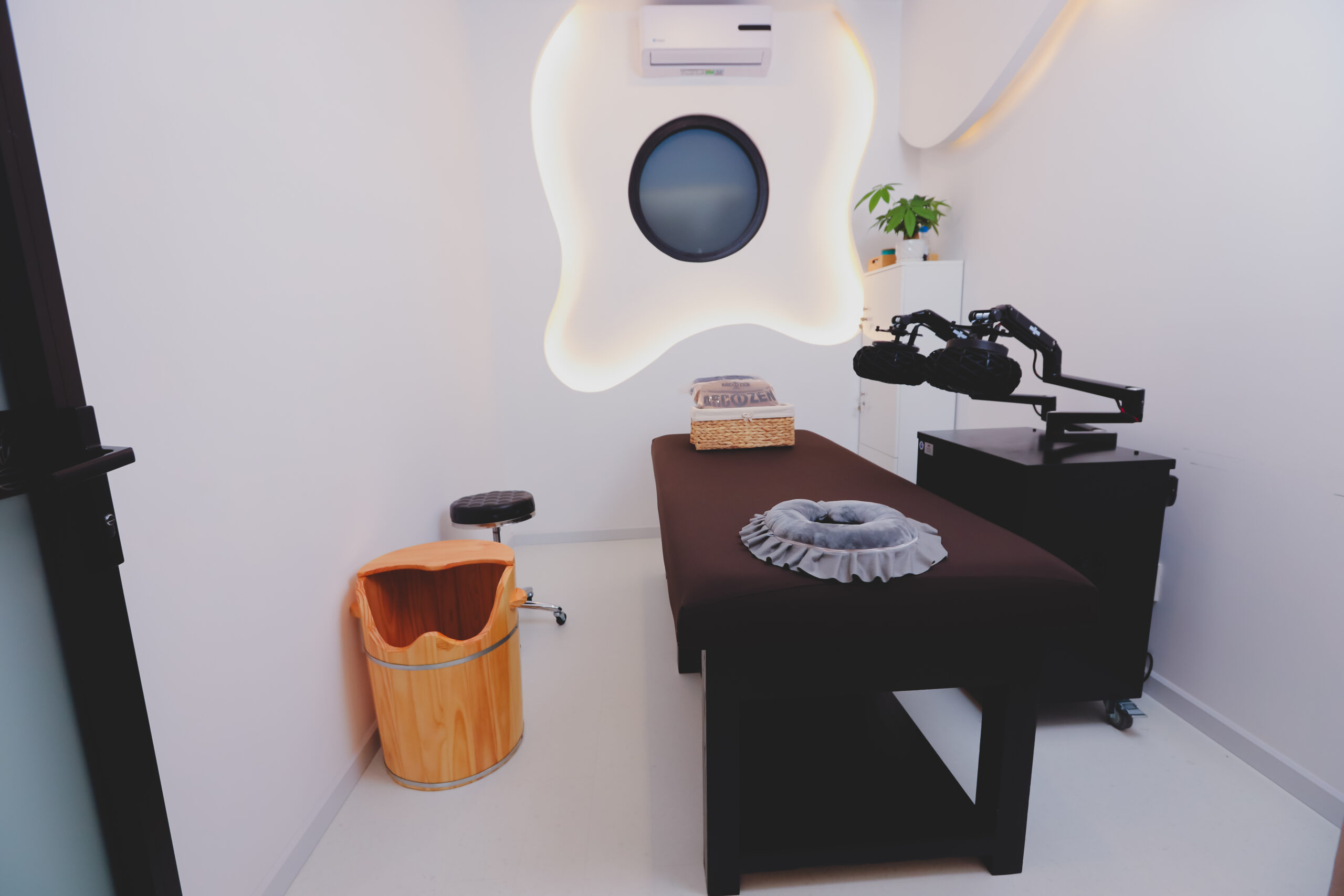
BIOPHILIC ARCHITECTURE IS THE BRIDGE BETWEEN THE HUMAN BODY, NATURE AND A SUSTAINABLE LIVING SPACE.
In an era of rapid urbanization and technological development, people increasingly tend to seek balance with nature. Biophilic Design is not merely a design style but a philosophy of living – where spaces are built to support physical health, mental well-being and long-term sustainability.
For Arctozen, this philosophy resonates with our holistic health-care orientation: combining modern technology such as PEMF with a living environment optimized according to nature.
Connecting With Nature – A Human Instinct
Humans inherently have a deep biological connection with nature. When living in an environment lacking natural light, greenery and natural ventilation, the body easily falls into a state of prolonged stress.
Biophilic architecture harnesses this factor by:
- Integrating greenery into the living space
- Using natural materials such as wood and stone
- Optimizing sunlight
- Creating natural airflow
Many studies show that an environment close to nature helps:
- Reduce stress hormones
- Increase concentration
- Improve mood
- Support faster recovery
LIVING SPACE DIRECTLY AFFECTS BIOLOGICAL HEALTH.
Improving Air Quality and Ventilation
Indoor air can contain many harmful agents if it is not well circulated.
Biophilic architecture prioritizes:
- Natural cross ventilation
- Green walls
- Low-emission materials
Clean air helps:
- Improve respiratory function
- Increase oxygen to the brain
- Support the cardiovascular system
This creates the foundation for a healthy body from the cellular level.
Natural Light and the Biological Rhythm
Sunlight plays an important role in regulating:
- The biological rhythm (circadian rhythm)
- The sleep–wake cycle
- The hormone melatonin
Designs with large windows, skylights and open spaces help the body:
- Sleep more deeply
- Stay alert during the day
- Maintain emotional stability
Biomorphic Forms and Psychological Health
Biomorphic design uses:
- Soft curves
- Organic shapes
- Fractal patterns
These elements help:
- Reduce visual stress
- Increase a sense of safety
- Stimulate creativity
A harmonious space contributes to stabilizing the nervous system and improving the mental state.
Sustainability and Ecological Responsibility
Biophilic architecture not only cares for people but also protects the ecosystem.
Its principles include:
- Optimizing natural energy
- Using renewable energy
- Reducing carbon emissions
- Choosing environmentally friendly materials
A sustainable environment is the very foundation of sustainable health.
COMBINING BIOPHILIC ARCHITECTURE AND PEMF TECHNOLOGY – THE DIRECTION OF THE FUTURE.
At Arctozen, the health-care space is oriented around a philosophy of harmony between nature and technology.
PEMF (Pulsed Electromagnetic Field) technology supports:
- Optimizing cellular energy
- Balancing the nervous system
- Supporting natural recovery
When PEMF is applied within a biophilic architectural environment, the relaxation and recovery effects are enhanced thanks to the resonance between space and technology.
CONCLUSION
BIOPHILIC ARCHITECTURE IS NOT JUST DESIGN – IT IS A STRATEGY FOR ELEVATING HEALTH AND QUALITY OF LIFE.
Combining:
- Natural light
- Fresh air
- Organic forms
- Health-care technology such as PEMF
Will create a balanced and sustainable living ecosystem.
Explore the comprehensive health-care solution at Arctozen – where technology and nature meet for a healthier future.